The five play facilities that attract the most guests to a holiday park are: an asphalt pump track, a water play element, a climbing frame or adventure course, a multi-sports cage, and a trampoline park or bouncy castle. These facilities score highly because they appeal to multiple age groups and keep guests active outdoors. In this article, we answer the most frequently asked questions about play facilities for recreation parks, from target audience reach and costs to legal requirements and lifespan.
What makes a play facility truly attractive to holiday guests?
Play facilities attract holiday guests when they are suitable for multiple ages, require little explanation, and immediately invite movement. Guests also choose a holiday park based on the range of activities offered, and facilities that keep both parents and children occupied at the same time always win out over equipment that caters to only one target group.
Three factors determine whether a play facility really works at a recreational site:
- Broad target audience reach: A facility that appeals to preschoolers, teenagers, and adults generates more daily usage than a device intended only for primary school students.
- Low threshold: Guests arriving for the first time want to participate immediately, without instruction or special equipment. The more accessible, the more usage.
- Social appeal: Facilities where you see, encourage, and use each other together keep guests outside longer and enhance the park experience.
Parks that invest in facilities with high repeat value—things guests want to try again every day—see that guests book longer and return more often.
Which 5 play facilities attract the most guests?
Based on usage, target audience reach, and popularity at recreation parks, these are the five play facilities that attract the most visitors:
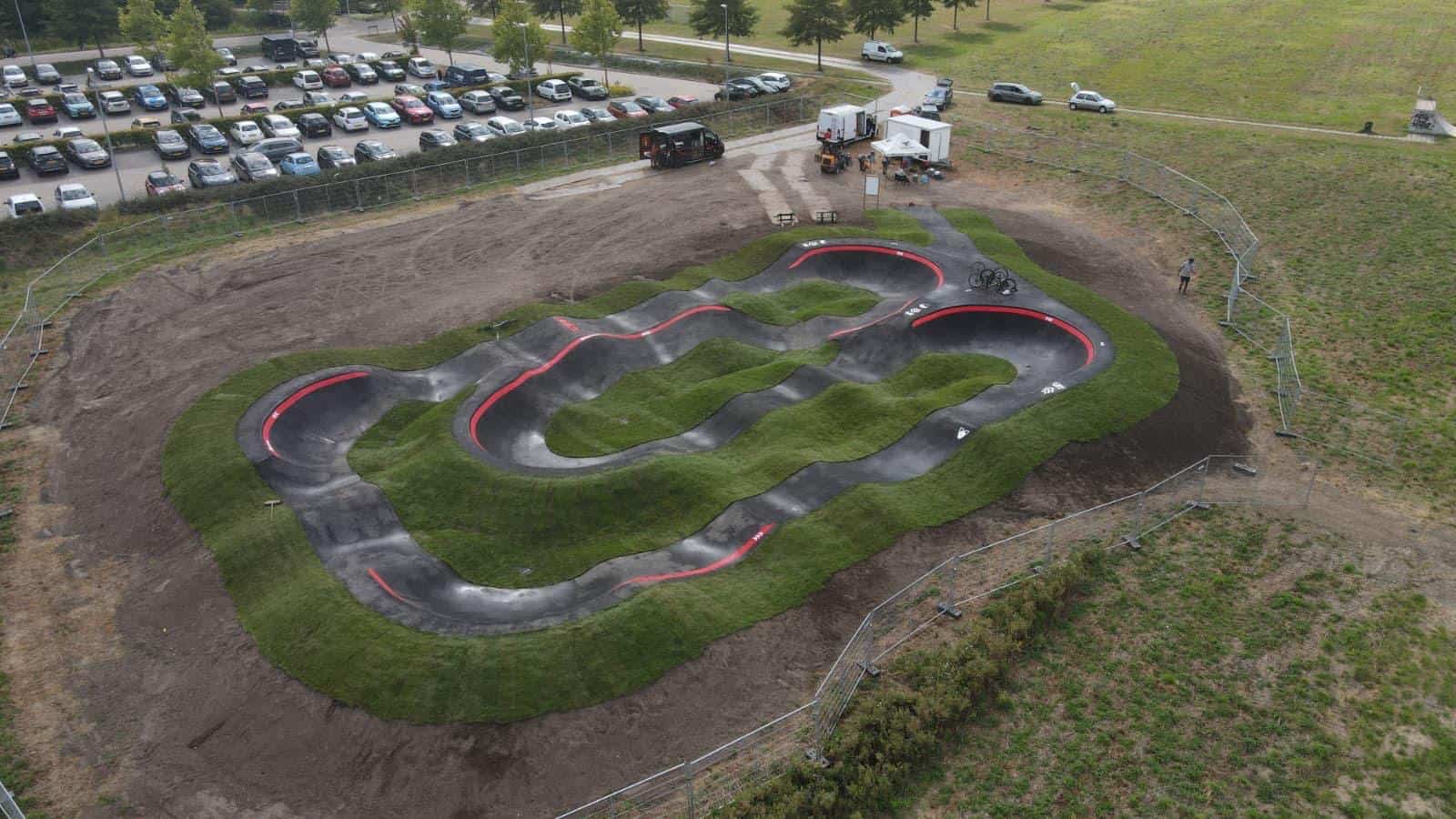
- Asphalt pumptrack: Suitable for anyone with wheels, from a toddler on a balance bike to an adult on a BMX or skateboard. asphalt pump track attracts a broad audience and has high repeat value.
- Water play element: Popular with young children and families during the summer months. Works best as a supplement to other facilities.
- Adventure course or climbing frame: Attracts children aged 4 to 12 and offers challenges on multiple levels. Requires relatively a lot of space.
- Multisport cage: Suitable for soccer, basketball, and other ball sports. Popular with teenagers and young adults, less so with young children or the elderly.
- Bouncy castle or trampoline park: High popularity among children, but limited in target audience reach. Works well as an additional attraction alongside broader facilities.
The pumptrack stands out in this list because it is the only facility that serves virtually all ages and users, including people in manual wheelchairs. That makes it one of the most cost-effective choices per square meter for a recreational site.
What is the difference between a pumptrack and a skatepark for recreation parks?
The biggest difference is the target audience. A skatepark focuses primarily on advanced skaters and BMX riders, whereas a pumptrack is immediately accessible to beginners of all ages. For a holiday park, where guests do not return weekly to build up a skill, that low barrier to entry is very important.
Other relevant differences at a glance:
- Users: A skatepark requires experience and has a higher barrier to entry. A pumptrack also works for children on a balance bike or scooter.
- Maintenance: Asphalt pumptracks require less maintenance than a skatepark with wooden or concrete elements that can crack or flake.
- Safety: Pumptracks have smooth, rounded transitions without sharp edges or high obstacles, making them safer for younger users.
- Space usage: A pumptrack can be designed compactly and therefore also fits on smaller terrains.
For recreation parks that want to reach the largest possible proportion of their guests, a pumptrack is in most cases the better choice than a traditional skatepark.
Want to have an asphalt PumpTrack installed?
500+ tracks worldwide · UCI certified · 5-year warranty
How long do play facilities last at a holiday park?
The lifespan of a playground facility depends heavily on the material and the quality of maintenance. Wooden playground equipment lasts an average of 8 to 12 years, while asphalt facilities such as pumptracks have a minimum lifespan of 20 years with proper maintenance. This makes asphalt significantly more cost-effective per user in the long run.
What determines the lifespan the most:
- Material: Asphalt is more durable than wood or plastic and reacts less to temperature fluctuations and moisture.
- Intensity of use: The more users, the faster wear and tear occurs. Facilities at busy holiday parks deserve a higher standard of quality.
- Maintenance: Annual inspection and timely repair of minor damage significantly extend the lifespan and prevent larger costs later on.
When considering the total investment, it is wise not to look solely at the purchase price, but at the total cost of ownership: installation, maintenance, and replacement over the entire lifespan. A cheaper device that needs to be replaced after eight years is rarely the most economical choice.
Which play facility fits a limited site or budget?
For limited terrain or budget, compact, multifunctional facilities are the best choice. A small asphalt pump track or a set of Velo Features—wooden riding obstacles for mountain bikes and cross bikes—already offers significant play value on a relatively small surface and for a lower investment than a full adventure course or multisport cage.
Practical guidelines for limited space or a limited budget:
- Choose width, not size: A small facility serving five target groups yields more than a large one that appeals to only two.
- Think in terms of cost per user: A 300 m² pump track attracts users aged 3 to 60 day in and day out. That quickly reduces the cost per use.
- Modular construction: Start small and expand later. Asphalt pumptracks lend themselves well to expansion if the budget allows it later.
A target price for an asphalt pump track is around 125 euros per m², including installation, finishing, and inspection. This makes an entry-level model feasible for parks with a limited investment budget.
What legal requirements must play facilities at a holiday park meet?
Play facilities at holiday parks in the Netherlands must comply with the Amusement and Play Equipment Act (WAS) and the associated standard NEN-EN 14974. This law applies to all play and sports equipment accessible to the public, including on recreational grounds and campsites. If you do not comply with the WAS, you, as a park manager, run the risk of liability in the event of accidents.
What the WAS means in practice:
- Inspection upon commissioning: Every new play facility must be inspected by a recognized body before guests use it.
- Periodic inspection: After the initial inspection, annual inspections are mandatory to continue guaranteeing safety.
- Documentation: You must be able to demonstrate that the facility has been certified and that inspections have been carried out. Keep certificates and inspection reports carefully.
- Liability: As a park manager, you are responsible for the safety of the facilities on your grounds.
Always ask every supplier for a certificate demonstrating that the facility complies with the WAS and NEN-EN 14974. Suppliers who cannot provide this pose a risk to your park.
How Velosolutions Pumptracks helps you choose the right playground equipment
We are the market leader in the Netherlands in the field of asphalt pumptracks, with more than 100 completed tracks and 12 years of experience. We are active in more than 35 countries worldwide. This means we know exactly what works and what doesn't at a recreational site.
This is what we can do for your holiday park:
- Custom design: We design a pumptrack that fits the available space, budget, and target audience of your park.
- Completely unburdened: From the initial consultation to the official inspection and annual maintenance, we take care of everything. You will receive a certificate in accordance with WAS legislation and NEN-EN 14974.
- Broad target audience reach: One of our pumptracks is suitable for anyone with wheels, from a child on a balance bike to an adult on a BMX, skateboard, scooter, or inline skates, including people in manual wheelchairs.
- Long lifespan: With a minimum lifespan of 20 years and a 5-year warranty, a pumptrack is an investment that pays off for years.
- Proven concept: View what we have already accomplished via our completed projects and see how other parks and municipalities handle this.
Are you considering installing a pumptrack at your holiday park or recreational site? We would be happy to discuss the possibilities, design, and available space with you. View our completed pumptracks of contact us without obligation to discuss the options.