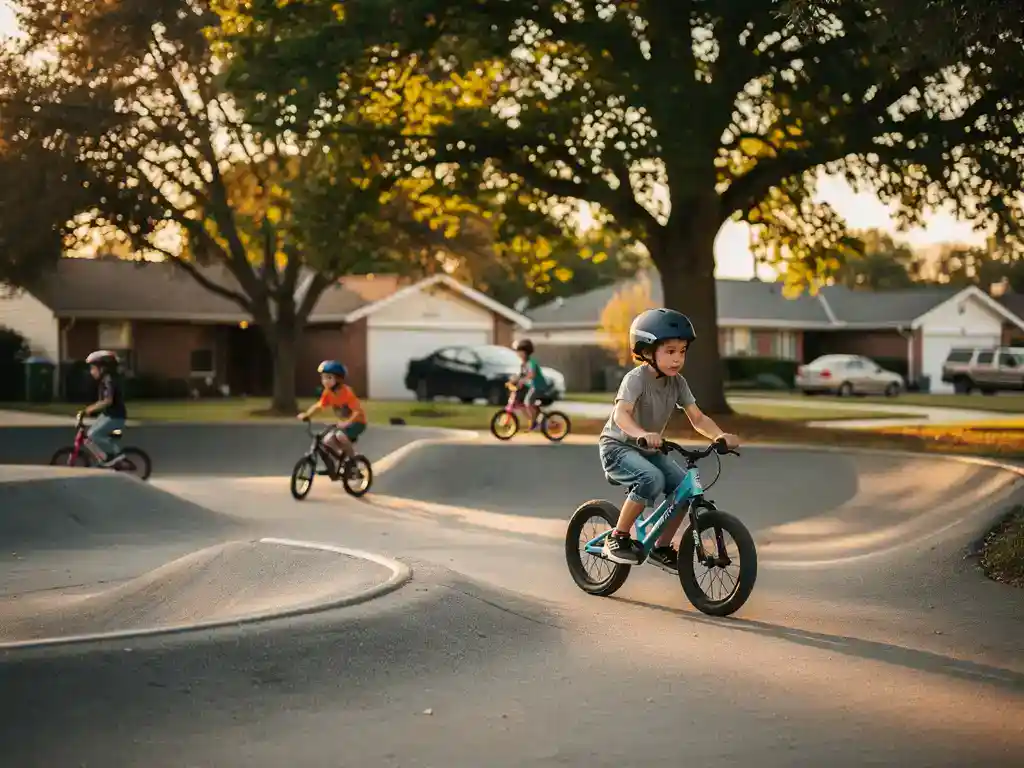
The neighborhood in which children grow up has a major influence on how much they play outside. Factors such as traffic safety, the presence of playgrounds, and the social environment together determine whether children go outside or stay indoors. Neighborhoods with safe streets, green spaces, and inviting playgrounds demonstrably result in more outdoor playtime. Do you want to know which factors make the biggest difference? In this article, you will read exactly what makes neighborhoods better or worse for outdoor play.
Why are children playing outside less and less?
Children play outside less because their living environment has changed significantly over the past decades. More traffic, less open space, and the rise of screens and digital entertainment mean that the barrier to going outside is becoming increasingly higher. For many children, the outside world feels less natural than it used to.
Parents also play a role in this. Concerns about traffic safety and social safety mean that many parents prefer to keep their children indoors. That is understandable, but it has consequences: less physical activity, fewer social contacts outside of school, and less development of independence. Playing outside is not only fun, it is also important for the physical and mental development of children.
In addition, the layout of neighborhoods has changed. Streets have become wider and busier, sidewalks narrower, and playgrounds are sometimes far away or uninviting. Children will naturally play outside more if the environment encourages them to do so.
Which characteristics of a neighborhood influence outdoor play behavior?
The neighborhood characteristics that have the most influence on outdoor play behavior are traffic safety, the presence of green spaces, the distance to playgrounds, and the social atmosphere in the neighborhood. Neighborhoods that score high on these points structurally allow more children to play outside.
Specifically, it concerns the following factors:
- Traffic congestion: Busy roads surrounding residential areas mean that parents give their children less freedom to play outside.
- Greenery and space: Neighborhoods with parks, lawns, or open spaces invite children to be outdoors.
- Distance to playgrounds: The closer a playground is to home, the more often children use it.
- Social cohesion: In neighborhoods where neighbors know each other, children feel safer outside.
- Quality of playgrounds: A challenging, well-maintained playground attracts more children than a worn-out swing in an empty square.
All these factors combined determine whether a neighborhood is an environment where children enjoy being outdoors. Municipalities that consciously invest in these aspects see a clear difference in how active children are outdoors.
Want to have an asphalt PumpTrack installed?
500+ tracks worldwide · UCI certified · 5-year warranty
How safe must a neighborhood be for children to play outside?
A neighborhood does not have to be perfectly safe, but a basic level of traffic safety and social safety is necessary before parents allow their children to play outside independently. In particular, the perception of safety—that is, how safe parents and children experience the neighborhood—is a determining factor in outdoor play behavior.
Traffic safety is the biggest hurdle in this regard. Streets with 30 km/h zones, sufficient pedestrian crossings, and minimal through traffic give parents more confidence. Lighting also plays a role, especially in autumn and winter when it gets dark early.
Social safety is about the feeling that children are seen and that there is supervision. This does not necessarily have to be formal supervision. In a neighborhood where people sit on the sidewalk, shops are open, and there is life on the street, children naturally feel safer. A lively, active neighborhood is therefore also a safe neighborhood for playing children.
What is the influence of playgrounds on how many children play outside?
Good playgrounds have a direct and measurable influence on outdoor play behavior. Children play outside more often and for longer periods if there is a challenging, accessible, and well-maintained playground nearby. The quality and challenge of a playground are just as important factors as its presence.
A worn-out playground with a single swing attracts few children. inclusive playground that challenges, gets moving, and is suitable for multiple ages attracts children of all ages and keeps them outside longer. The latter is beneficial: the longer children are outside, the more they move and develop social skills.
Playgrounds also have a social function. They are the place where neighborhood children meet, make friends, and play together. For parents, they are also meeting places, which strengthens social cohesion in a neighborhood. A good playground is therefore not only good for children, but for the entire neighborhood.
Do you want to know what is already possible in your municipality? View our completed projects for inspiration and concrete examples.
How can municipalities get more children to play outside?
Municipalities can enable more children to play outdoors by consciously investing in the physical and social design of neighborhoods. This means: safe streets, inviting playgrounds within walking distance, and space for spontaneous play. Small adjustments to outdoor spaces can already make a big difference.
Practical steps municipalities can take:
- Low-traffic zones construct around schools and playgrounds.
- Upgrading playgrounds towards challenging, multifunctional facilities that appeal to multiple ages.
- Playgrounds closer to home realize, so that children can go there independently.
- Inclusivity incorporate into the design, so that children with disabilities can also participate.
- Taking maintenance seriously, because a poorly maintained playground deters children and parents.
Municipalities that take outdoor play seriously also see long-term health benefits for children and stronger social cohesion in neighborhoods. It is an investment that pays off.
How Velosolutions helps more children play outside
At Velosolutions, we believe that every municipality can give children a reason to go outside. With our permanent asphalt PumpTracks and multi-purpose play areas, we make outdoor play appealing to all ages, from toddlers on balance bikes to teenagers on BMX bikes. Our tracks are accessible to wheelchair users—including those with a manual wheelchair, without the need for a handbike—and designed to be actually used. Wearing a helmet is mandatory on Velosolutions PumpTracks so that everyone can safely enjoy the track.
This is what we offer:
- Custom design, tailored to the neighborhood and the target group
- Professional installation of durable asphalt PumpTracks with a lifespan of at least 20 years.
- Annual inspection and maintenance to keep the track in top condition, also available via a maintenance contract.
- Guidance from idea to completion, including certification
- Experience with more than 500 tracks worldwide and 10 years of experience in the Benelux
Read more about us and discover how we collaborate with municipalities, schools, and housing associations. Ready to make a difference in your neighborhood? Request a no-obligation consultation and we are happy to think along with you.