A municipal decision-making process for a playground takes on average one to three years, depending on the size of the project, the available budgets, and the internal priorities of the municipality. Small projects with an existing budget can proceed faster, but larger investments, such as the installing a PumpTrackThey often follow a longer process involving policy, budget, and public participation. In this article, we explain step by step what that process looks like and what you can do to ensure it runs as smoothly as possible.
How long does a municipal decision-making process take on average?
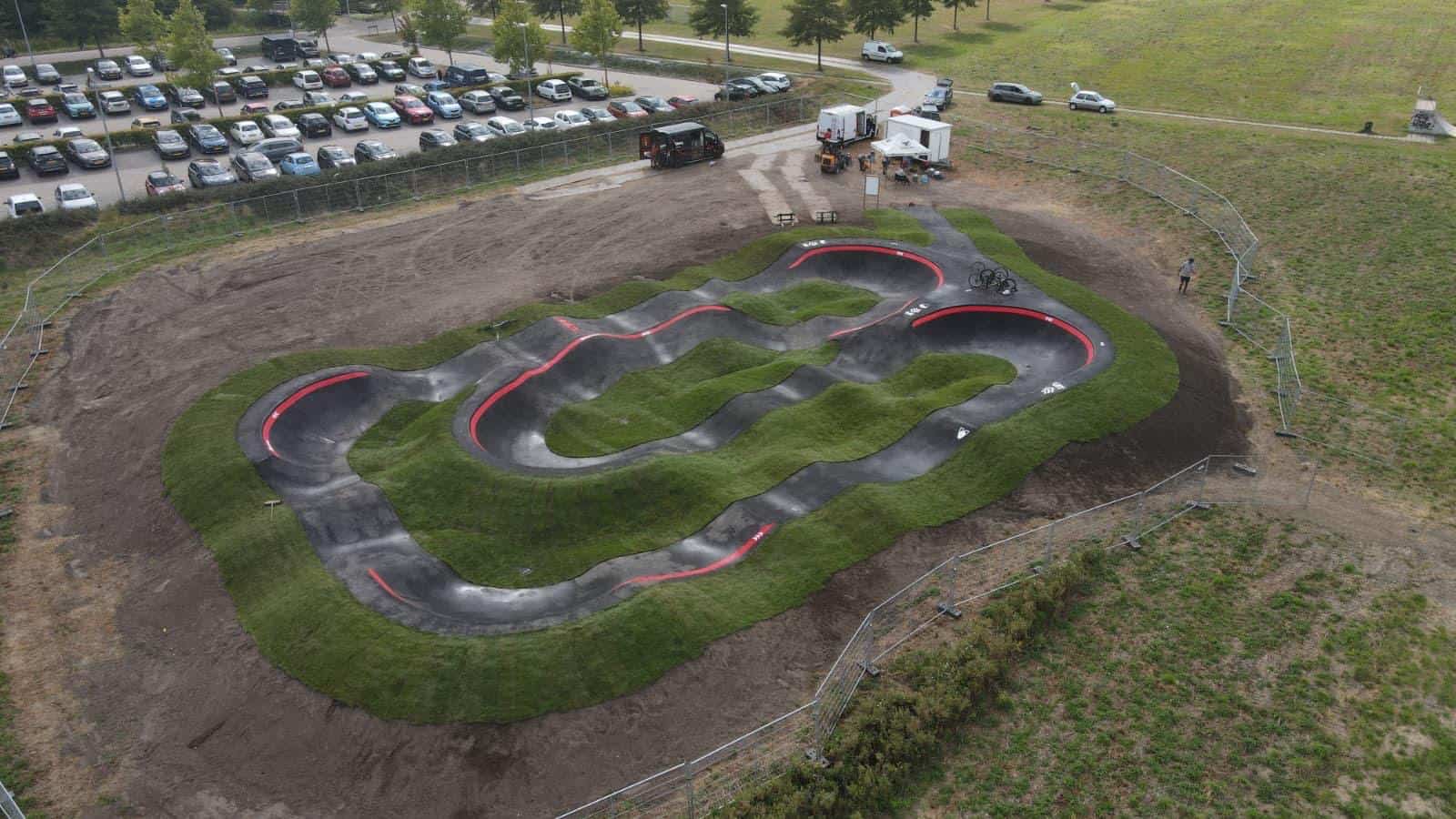
A municipal decision-making process for a new playground facility takes on average one to three yearsThe exact lead time depends on the project scope, whether budget is available in the current budget, and the amount of internal and external coordination required. Smaller adjustments to existing playgrounds proceed faster; a completely new facility, such as a PumpTrack, requires more preparation.
The greatest time savings or loss usually occur within the budget cycle. If a project is not submitted on time for the annual budget, it is automatically pushed back by a year. This means that timing and preparation make a significant difference in how long it ultimately takes.
What steps does a municipality go through when purchasing a playground?
When purchasing playground equipment, a municipality follows a fixed series of steps: from policy assessment and budget request, via public consultation and design, to tendering and ultimately realization. Each step has its own lead time and involved parties.
Below you will see the most common steps listed:
- Inventory and policy substantiation — Policy officers for sports and public space map out the needs. Which target groups are served? Which locations are eligible?
- Budget request and approval — The investment is included in the municipal budget or submitted to the Municipal Executive as a separate application.
- Consultation and participation — Residents and stakeholders will have the opportunity to contribute ideas regarding the location and design.
- Tendering or quotation process — Depending on the amount, a European tender or a multiple negotiated procedure will follow.
- Design and permitting — The final design is being developed and any necessary permits are being applied for.
- Realization and delivery — The facility is constructed, inspected, and delivered with certification.
Each of these steps can take weeks to months. The better the preparation in the first phase, the smoother the rest of the process will run.
Want to have an asphalt PumpTrack installed?
500+ tracks worldwide · UCI certified · 5-year warranty
When must a municipality include a playground facility in the budget?
A municipality must have a playground no later than the spring of the year preceding the desired realization include in the budget. The municipal budget cycle typically runs from spring to autumn, with adoption in November. Anyone who misses that deadline automatically waits a year.
In practice, this means that as a policy officer, you must start preparing a substantiated application as early as the first quarter of the year. Think of a cost estimate, a location justification, and a description of the target groups the facility serves. The more concrete the proposal, the greater the chance of approval.
Some municipalities also work with a multi-year plan for sports and public space. If the construction of a PumpTrack is included in this plan, the budget application process is much simpler.
What are the legal requirements for a new playground in the Netherlands?
In the Netherlands, every new playground facility must comply with the Amusement and Playground Equipment Act (WAS) and the associated standard NEN-EN 14974This legislation sets requirements for the safety of the structure, the subsoil, and the annual inspection. Municipalities are legally obliged to comply with these.
In concrete terms, this means that a new playground facility must be provided with a valid certificate upon completion. Subsequently, the municipality is responsible for periodic inspections and maintenance to ensure safety. Failure to comply with these rules can lead to liability in the event of accidents.
For a asphalt PumpTrack The same requirements apply. The WAS certification and NEN-EN 14974 serve as proof that the device is safe for all users, from young children to adults.
How does a municipality accelerate the decision-making process for a playground?
A municipality accelerates the decision-making process by starting early, writing a strong substantive proposal, and involving the right people internally. The three biggest delaying factors are a missed budget deadline, insufficient internal support, and uncertainty regarding certification requirements.
Practical tips to speed up the process:
- Start the preparation a year in advance, so that you do not miss the budget cycle.
- Make use of reference projects from other municipalities to create internal support. Decision-makers opt for proven concepts.
- Involve the Legal Affairs department early with the procurement method, so that you do not incur delays afterwards.
- Work with a supplier who handles the entire process, including design, certification, and delivery. That saves on internal coordination.
- Organize participation parallel to the design instead of afterwards, so that public consultation does not cause delays.
Do you want to know what other municipalities have already achieved? View our completed projects for concrete examples that you can use in an internal proposal.
How much does a PumpTrack cost and how does it fit within a municipal budget?
The investment for an asphalt PumpTrack varies depending on the size and design, but is typically between tens of thousands and a few hundred thousand eurosCompared to a traditional skatepark or playground, a PumpTrack offers a favorable ratio between investment, target audience reach, and lifespan.
A PumpTrack has a lifespan of at least 20 years, with relatively low annual maintenance costs. If you divide the total investment by the number of years and the number of users, the cost per user is often lower than with traditional play facilities that serve only a limited age group.
For municipalities with a limited budget, there are also smaller options, such as Velo Features: separate wooden obstacles that require a lower investment but immediately stimulate movement. This way, a first step towards urban sports fits into a smaller budget as well.
| Aspect | Traditional playground | Skatepark | Asphalt PumpTrack |
|---|---|---|---|
| Target audience | Children (2-12 years) | Teenagers and young adults | All ages |
| Longevity | 10-15 | 15-20 | At least 20 years old |
| Maintenance | Regularly | Low | Low |
| Certification | subject to WAS | subject to WAS | WAS + NEN-EN 14974 |
| Target audience reach | Narrow/Slim | Narrow/Slim | Wide |
How Velosolutions helps with the municipal decision-making process
Velosolutions understands that the municipal decision-making process can be complex and time-consuming. Therefore, we offer not only a PumpTrack, but the complete traject from the initial consultation to certified delivery. Velosolutions also offers annual inspection and maintenance, which can also be purchased via a maintenance contract, ensuring the PumpTrack remains safe and in top condition. This way, as a municipality, you have to arrange as little as possible yourself.
What we do for you:
- Support in drafting a substantiated proposal for the municipal budget
- Reference projects and comparisons that create internal support
- Custom-made designs that fit the available space and the budget
- Full certification in accordance with WAS legislation and NEN-EN 14974
- 5-year warranty and annual inspection and maintenance — also available via a maintenance contract — to keep the PumpTrack in top condition
- More than 100 completed PumpTracks in the Netherlands as proof of experience
Discover who we are and read more about our approach as the market leader in the Netherlands. Do you want to know immediately what a PumpTrack can mean for your municipality? Request a no-obligation consultation and we are happy to think along with you.