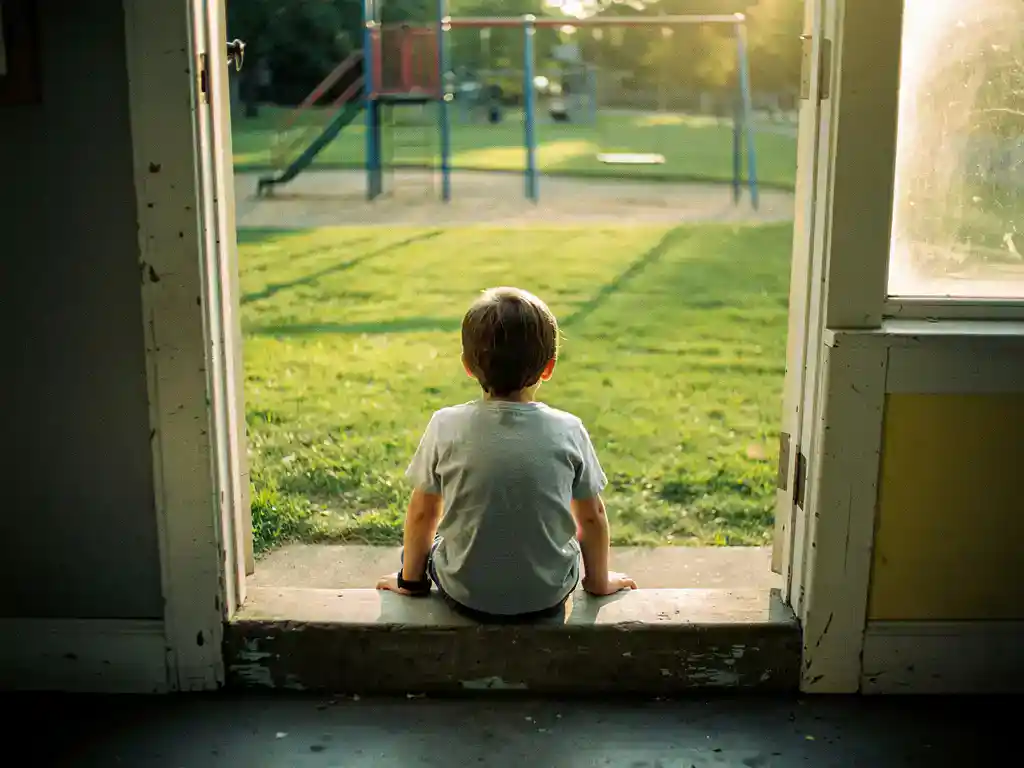
Children who do not play outside enough are at risk of physical and mental health problems. These include poorer fitness, obesity, sleep problems, and an increased risk of anxiety or concentration difficulties. Playing outside is not a luxury; it is a basic need. Fortunately, as a parent, municipality, or school, you can make a concrete contribution to more outdoor playtime, and that starts with understanding what is at stake.
What are the consequences for children of not playing outside enough?
Too few playing outside has direct consequences for the health, development, and well-being of children. Children who primarily stay indoors move less, develop fewer motor skills, and miss out on the social interaction that playing outside brings. Their concentration and sleep quality also deteriorate.
Playing outdoors stimulates the production of vitamin D through exposure to sunlight, which is important for strong bones and a good immune system. Children who spend little time outdoors are at greater risk of nearsightedness, because indoors the eyes hardly get the chance to focus on distant distances. In addition, nature plays a proven positive role in reducing stress and improving mood.
Socially, children who play outside infrequently miss opportunities to play together, negotiate, resolve conflicts, and form friendships. These are skills you do not learn behind a screen.
How much time do children need to play outside per day?
Children need at least one hour of active movement daily, and a large part of this is best done outdoors. For younger children up to six years of age, as much movement as possible throughout the day is beneficial. The more time outdoors, the better, as long as it is varied and challenging.
The Dutch physical activity guidelines advise children and young people up to the age of eighteen to engage in at least one hour of moderate to intense physical activity daily. Playing outdoors is one of the most natural ways to achieve this, because children challenge themselves without it feeling like sport or exertion.
A handy rule of thumb: try to schedule at least an hour of unstructured outdoor playtime every day, in addition to any sports or gym. Unstructured means that children decide for themselves what to do, without instructions from adults. It is precisely this freedom that makes outdoor play so valuable for development.
Want to have an asphalt PumpTrack installed?
500+ tracks worldwide · UCI certified · 5-year warranty
Why do children play outside less nowadays?
Children play outside less due to a combination of factors: increased screen time, busy schedules, less safe play space in the neighborhood, and parents worried about traffic or safety. For many children, the outside world has become less inviting than the screen indoors.
Smartphones, tablets, and game consoles offer instant gratification and are continuously available. Playing outdoors requires more initiative, a playmate, and a suitable spot. If that spot is not available or not attractive enough, children naturally choose the easy alternative.
The design of neighborhoods also plays a major role. Many neighborhoods have few challenging outdoor play areas for children of different ages. A simple slide no longer appeals to a teenager, but a skatepark or PumpTrack does. The available options partly determine behavior.
How do you encourage children to play outside more often?
You encourage children to play outside more often by providing challenging, accessible play areas, making outdoor play part of the daily routine, and leading by example. Lowering the barrier works better than imposing rules.
Practical tips that really work:
- Make playing outside the standard after school. Explain that screen time only begins after an hour of playing outside.
- Go along yourself. Children play outside longer if a parent or caregiver is also present, especially younger children.
- Find playmates in the neighborhood. Children prefer playing outside when friends are around. Organize playdates outside the house.
- Choose a challenging playground. An environment that stimulates, such as a inclusive playground for children of all ages, keeps children captivated longer.
- Consciously limit screen time. Not as punishment, but as a clear daily structure. Children get used to this quickly.
Municipalities and schools can also make a significant contribution by investing in attractive outdoor play areas. View our completed projects for inspiration on what is possible in your neighborhood.
What makes an outdoor play location suitable for all ages?
A good outdoor play area for all ages offers variety in challenges, is safe and accessible to everyone, and encourages both free play and active movement. The place should be just as appealing to a toddler as it is to a teenager on a BMX.
The most successful gaming venues combine a number of characteristics:
- Multiple levels of challenge: so that both beginners and advanced players have fun.
- Accessibility: also for children and adults with disabilities, including users of manual wheelchairs.
- Social space: benches, a clear view, a place where parents can sit while children play.
- Durable materials: a place that looks just as good in ten years as it did on day one.
- Free use: no fixed hours, no membership, just always open.
A location that meets all these criteria automatically attracts more users, from young to old, and ensures that children naturally go outside more often.
How Velosolutions helps more children play outside
At Velosolutions, we believe that the right outdoor play area makes all the difference. We design and build. permanent asphalt PumpTracks which are suitable for all ages, from a toddler on a balance bike to a teenager on a skateboard. Our tracks are accessible to wheelchair users — including those with a manual wheelchair, without the need for a handbike — and comply with Dutch safety standards (WAS and NEN-EN 14974). The tracks are always freely accessible, and wearing a helmet is mandatory on Velosolutions PumpTracks.
What we offer:
- Fully custom design, tailored to the location and the target audience
- Professional installation by an experienced team with more than 500 projects worldwide.
- Annual inspection and maintenance, so that the PumpTrack always remains in top condition — also available via a maintenance contract.
- Guidance from the initial meeting up to and including the official inspection
- Tracks with an expected lifespan of at least 20 years, suitable for children, adolescents, adults, and people with disabilities.
Discover who we are and read more about our approach. Do you want to know what a PumpTrack can mean for your municipality, school, or neighborhood? Request a no-obligation consultationWe are happy to think along with you.