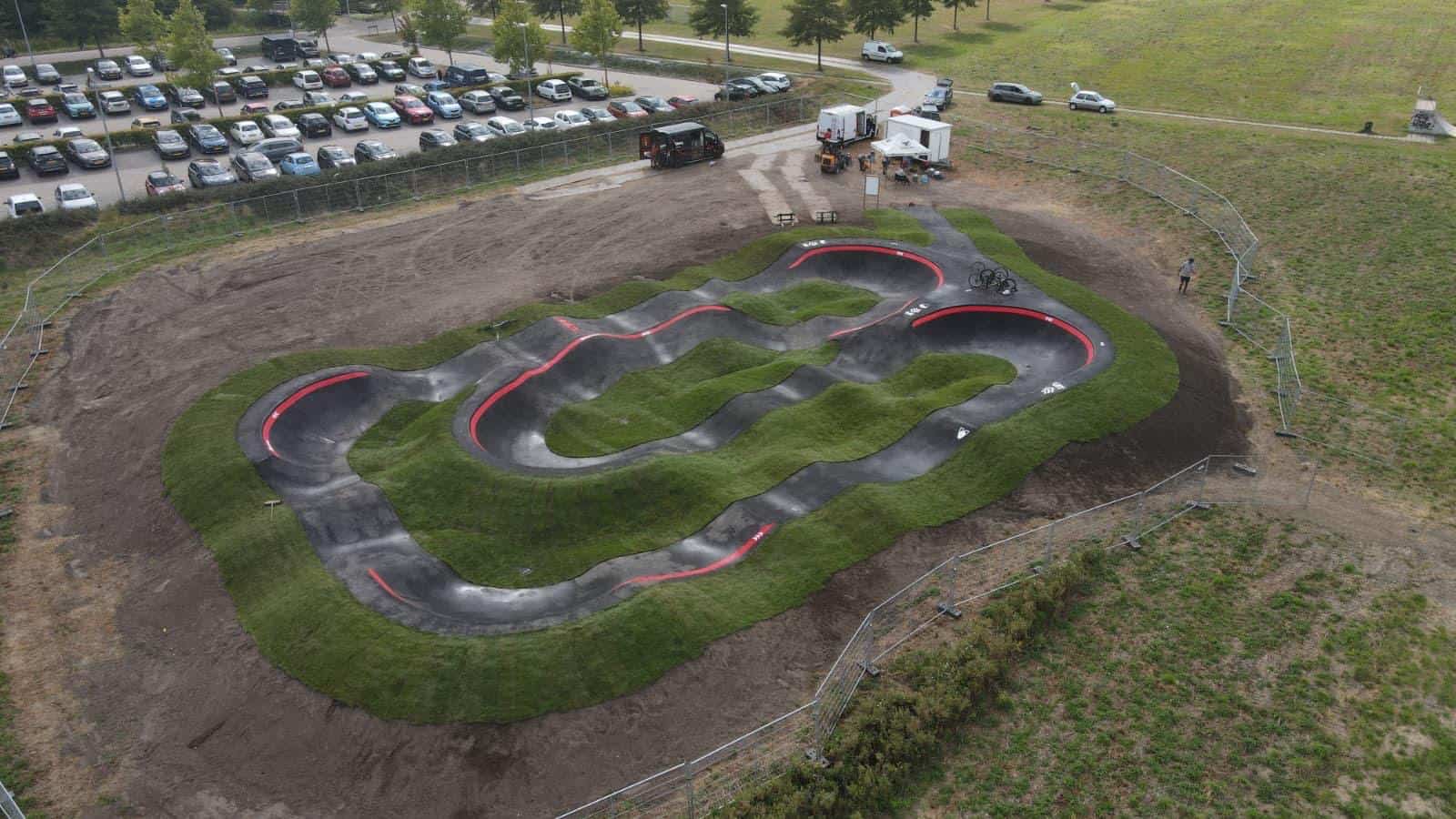
The most suitable surface for a PumpTrack is asphaltAsphalt offers the best combination of durability, driving comfort, and safety for all users. The material is resistant to varying weather conditions, has a long lifespan of at least 20 years, and requires relatively little maintenance. In this article, we answer the most frequently asked questions about subsurfaces, materials, legislation, and maintenance, so that you know exactly what to look out for when installing a PumpTrack.
What materials are used for a PumpTrack?
The most commonly used materials for a PumpTrack are asphalt en modular plastic elementsAsphalt is by far the most popular choice for permanent outdoor locations. Modular systems are sometimes used for temporary or indoor setups. Both options have their own advantages and disadvantages, depending on the location, budget, and intended use.
When you do asphalt PumpTrack A special mixture is used that is processed by hand. This manual processing ensures that the curves, hills, and rollers take on exactly the right shape. This is craftsmanship that cannot be replicated by a machine. The result is a smooth, rideable track that feels pleasant for cyclists, skaters, scooter riders, and inline skaters.
In addition to asphalt, there are also Velo Features Available: individual wooden obstacles that you can place in a park or on a field. This is a cheaper alternative if you do not want to build a full PumpTrack right away. They are versatile and suitable for mountain bikes and cross bikes.
Why is asphalt the most commonly used surface for PumpTracks?
Asphalt is the most commonly used surface for PumpTracks because it is sustainable, safe and suitable for all usersThe material is resistant to rain, frost, and heavy use, and has a lifespan of at least 20 years. Furthermore, the riding surface is smooth enough for small wheels but rough enough to provide grip, making it safe for young children and advanced riders.
An asphalt PumpTrack is accessible to anyone with wheels: from a toddler on a balance bike to an adult on a BMX, skateboard, scooter, or inline skates. This wide range of uses makes it one of the most cost-effective sports facilities a municipality can build. You serve multiple age groups simultaneously with a single track, which keeps the cost per user low.
Compared to wood or concrete, asphalt also has an advantage in terms of maintenance. Wood rots, flakes, and requires regular treatment. Concrete is more prone to breakage during temperature fluctuations. Asphalt is more flexible, requires less maintenance, and is easier to repair if necessary. That makes it a smart investment in the long run.
Want to have an asphalt PumpTrack installed?
500+ tracks worldwide · UCI certified · 5-year warranty
What is the difference between an asphalt and a modular PumpTrack?
The main difference between an asphalt PumpTrack and a modular PumpTrack is continuity and driving qualityAn asphalt PumpTrack is a fixed structure that is designed and built specifically for the location. A modular PumpTrack consists of separate plastic or composite elements that you can assemble, move, and store.
Below you will see the most important differences listed:
- Ride quality: Asphalt feels smoother due to the hand-gripping and the solid surface. Modular tracks have seams between the elements, which makes the riding feel less smooth.
- Lifespan: Asphalt lasts at least 20 years with proper maintenance. Modular systems are more susceptible to wear and UV degradation.
- Flexibility: Modular tracks are movable, which is convenient for temporary events or indoor locations. Asphalt is permanent.
- Cost: The installation costs of asphalt are higher, but the total cost of ownership is often lower due to the longer lifespan and lower maintenance costs.
- Certification: Permanent asphalt PumpTracks can be certified according to WAS legislation and NEN-EN 14974. For modular systems, this varies by manufacturer.
For municipalities and recreation parks that invest in a permanent sports facility asphalt is almost always the better choice. Do you want to know what such an asphalt track looks like in practice? View our completed projects for concrete examples.
What requirements does WAS legislation impose on the subsurface of a PumpTrack?
The WAS legislation (Amusement and Playground Equipment Act) states that a PumpTrack that is accessible to the public, must be safe and must comply with the standard NEN-EN 14974This standard applies specifically to skateparks and similar facilities. The surface must be free of dangerous irregularities, provide sufficient grip, and have no sharp edges or protruding elements.
Specifically, this means for the subsurface:
- The surface must be continuous and stable, without loose stones or potholes.
- The fall zone around the track must be free of obstacles.
- The course must be inspected periodically by a certified inspector.
- The installation must be documented and accompanied by a certificate of conformity.
For municipalities, this is not a minor matter. Legally, a PumpTrack that does not comply with WAS legislation may not be opened to the public. Asphalt PumpTracks built according to the NEN-EN 14974 standard and certified provide municipalities with the assurance that they meet all legal obligations. More about certified asphalt PumpTracks you can read about it on our product page.
How much space and what ground conditions are needed for a PumpTrack?
For a PumpTrack you need at least 400 to 600 square meters needed for a functional track suitable for multiple users simultaneously. Smaller variants are possible, but offer less driving pleasure and capacity. Larger tracks of 1.000 square meters or more are ideal for municipalities that want to serve a broad target group.
With regard to soil conditions, the following points of attention apply:
- Carrying capacity: The subsoil must be firm enough to support an asphalt pavement. Additional foundation is required in soft or peaty soil.
- Water drainage: Good drainage prevents water from pooling beneath the asphalt layer, which negatively affects its lifespan. A slight slope or drainage system is therefore part of the design.
- Height differences: Completely flat terrain is ideal, but slight elevation differences can be compensated for in the design. Steep slopes or irregular terrain require more preparation.
- Surroundings: Take into account trees and roots in the vicinity that could damage the foundation over time.
During the design process, the location is always assessed based on these factors. This way, you know in advance what is needed and won't be faced with any surprises.
How is an asphalt PumpTrack maintained after installation?
You maintain an asphalt PumpTrack by annual inspections and targeted repairs to carry out. The material itself requires little maintenance, but intensive use and varying weather conditions can eventually cause minor cracks or wear. Early intervention prevents major damage and keeps the track safe and rideable. Velosolutions offers annual inspection and maintenance, which can also be purchased via a maintenance contract.
A good maintenance schedule looks roughly like this:
- Annual inspection: Check the surface for cracks, sagging, or damaged edges.
- Cleaning: Remove leaves, sand, and dirt that can make the surface slippery.
- Minor repairs: Fill cracks or irregularities in a timely manner with asphalt sealant or a new mixture.
- Large-scale recovery: After several years, a thin top layer can be applied to make the track drive like new.
With a lifespan of at least 20 years and relatively low maintenance costs, an asphalt PumpTrack is an investment that pays for itself. Especially when compared to the costs of traditional playground equipment or a skatepark, which often have a shorter lifespan and require more maintenance.
How Velosolutions helps with choosing and installing the right sub-base
Velosolutions is the market leader in the Netherlands with over 12 years of experience and more than 100 installed asphalt PumpTracks. We guide municipalities and recreation parks from the initial consultation through to delivery and annual maintenance service. Our PumpTracks are the only ones in the world to be UCI-certified and fully comply with WAS legislation and NEN-EN 14974.
This is what we arrange for you:
- Location assessment: We assess the soil conditions, dimensions, and surroundings of your location.
- Custom design: Each design is tailored to the available space and the target audience you want to reach.
- Certified installation: We build using specialized manual workmanship and deliver the certificate of conformity.
- 5 years warranty: On all PumpTracks that we build.
- Annual maintenance: We keep the course in top condition via a maintenance contract or a single annual inspection, so you don't have to worry about anything.
Discover who we are and read more about our approach. Or request a no-obligation consultation and discuss the possibilities for your municipality or recreation park.