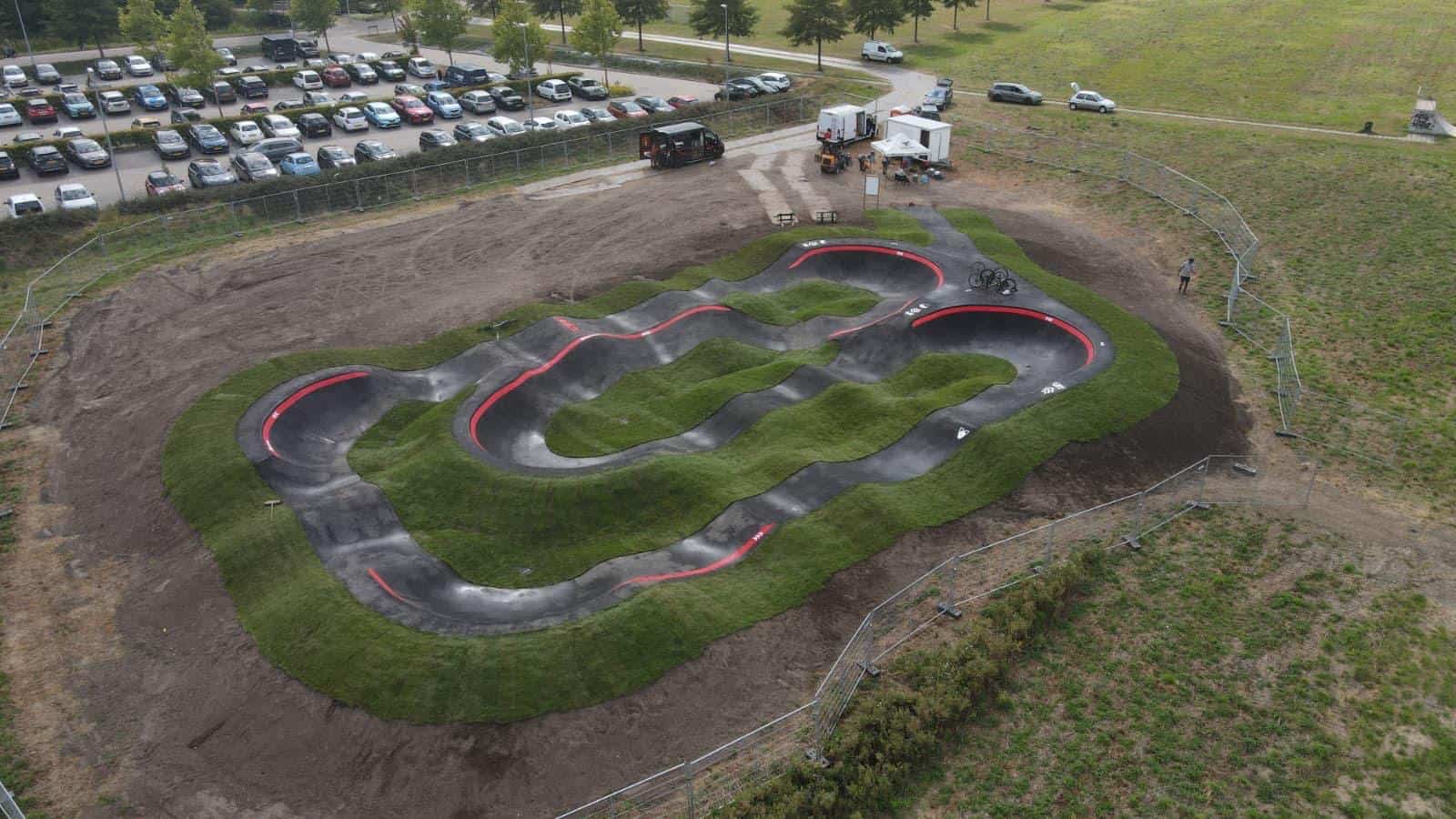
The most popular outdoor play facilities at holiday parks are those that cater to multiple age groups simultaneously: think of adventure climbing frames, trampolines, water games, skateboarding facilities, and pump tracks. It is precisely this last category that is gaining significant popularity, because a single facility is suitable for children, teenagers, and adults. In this article, we answer the key questions you ask as a park manager before making an investment.
Which outdoor play facilities attract the most guests of all ages?
Outdoor play facilities that attract guests of all ages are those where a four-year-old, a fifteen-year-old teenager, and a parent alike can enjoy themselves. Classic playground equipment attracts preschoolers but quickly loses its appeal to older children. Multifunctional sports facilities consistently score better in terms of reach.
The most popular categories at holiday parks in 2026 are:
- Multisport facilities such as pumptracks and skate elements, suitable for bicycles, scooters, skateboards, and inline skates
- Water attractions such as play fountains and water games, popular with young children in the summer
- Climbing structures and adventure routes that offer a challenge for different levels
- Ball sports facilities such as a soccer cage or basketball court, popular with teenagers and young adults
- Exercise equipment for adults that stand next to playground equipment and keep parents active
The pattern park managers are seeing increasingly often: guests consciously choose a park with more to do. A facility that keeps the whole family occupied at the same time increases stay satisfaction and the likelihood of a return visit. This makes the breadth of the target audience one of the most important criteria when choosing a new park. play facility.
What makes an outdoor play facility suitable for a recreation park?
An outdoor play facility is suitable for a recreation park if it is safe, requires little maintenance, serves a broad target group, and fits within the available space. Recreation parks have different requirements than a schoolyard or neighborhood park: the facility must be able to withstand intensive daily use and be visually appealing to new guests.
Concrete criteria to look out for:
- Target group breadth: The more ages and levels the facility serves, the greater the added value per square meter.
- Sustainability of the material: Outdoor use by changing guests requires robust structures that can withstand the elements.
- Serviceability: A park manager does not have time for weekly repairs; choose facilities with a low maintenance frequency.
- Certification: Every play facility at a recreation park must comply with Dutch WAS legislation and be provided with a valid inspection certificate.
- Visual appearance: An attractive-looking facility acts as a marketing tool and attracts guests who would otherwise choose another park.
Recreational parks that invest in distinctive facilities see guests actively share this on social media. This indirectly makes the facility a promotional tool for the park as well.
How does a pumptrack differ from traditional playground equipment or a skatepark?
A pumptrack differs from traditional playground equipment in that it has no fixed age limit and requires no specific skill to get started. Compared to a skatepark, a pumptrack is more accessible to beginners and suitable for more types of vehicles. This makes it one of the widest range of sports facilities you can install at a recreation park.
An overview of the key differences:
- Target audience: A playground is aimed at children up to approximately twelve years old; a skatepark primarily attracts teenagers and young adults; a pumptrack is suitable for everyone from a toddler on a balance bike to an adult on a BMX, mountain bike, skateboard, scooter, or inline skates.
- Accessibility: On a pumptrack, you determine your own speed and level; you can ride around at a leisurely pace or go full throttle, without experienced users getting in the way of beginners.
- Wheelchair accessibility: An asphalt pumptrack is also accessible to manual wheelchairs, which playgrounds and skateparks rarely are.
- Space usage: A pumptrack fits on a relatively compact surface and still offers a complete sports experience.
- Lifespan: Asphalt lasts considerably longer than wooden playground equipment, with a minimum lifespan of twenty years with proper maintenance.
View realized pumptrack projects to get a good picture of what is possible in practice in various fields and locations.
Want to have an asphalt pump track installed?
500+ tracks worldwide · UCI certified · 5-year warranty
What are the long-term maintenance costs of outdoor play facilities?
The maintenance costs of outdoor play facilities vary widely depending on the material and construction type. Wooden play equipment typically requires annual painting, inspection for rot, and replacement of parts. Asphalt sports facilities, such as a pump track, have a significantly lower maintenance frequency and a longer lifespan, which substantially reduces total costs over the years.
A general overview of maintenance costs by type:
- Wooden playground equipment: relatively high annual costs due to wood rot, paint maintenance, and replacement of moving parts; average lifespan eight to twelve years
- Metal play structures: lower maintenance costs, but susceptible to rust if the coating is damaged; lifespan ten to fifteen years
- Asphalt pumptracks: low annual maintenance costs, no moving parts to wear out, minimum lifespan of twenty years; an annual inspection is sufficient to keep the facility safe and in top condition.
When choosing a asphalt pump track It is useful to calculate the total costs over the entire lifespan, not just the purchase price. A cheaper wooden structure that needs to be replaced after ten years is often more expensive in the long run than a robust asphalt road that lasts twenty years.
Which certifications are required for play facilities at a holiday park?
Play facilities at holiday parks in the Netherlands must comply with the Amusement and Play Equipment Act (WAS). This means that every piece of play equipment must be inspected by a recognized inspection body and be provided with a valid certificate. The relevant standard for sports facilities such as pumptracks is NEN-EN 14974.
What the WAS legislation means in practice for park managers:
- Every new playground facility must be inspected and certified before being put into use.
- Annual re-inspection is mandatory to keep the certificate valid.
- An interim inspection is required in the event of damage or modifications to the facility.
- The manager is responsible for maintaining a logbook of inspections and maintenance.
- In the event of non-compliance, a park manager risks fines and liability in the event of accidents.
Preferably choose a supplier that includes certification as part of the total package, so that you, as a park manager, do not have to arrange an inspection body yourself afterwards.
How do you choose the best outdoor play facility for your recreation park?
You choose the best outdoor play facility for a recreation park based on four factors: the breadth of the target audience you wish to reach, the available space, the available budget over the entire lifespan, and the maintenance burden you can handle as a manager. A facility that scores well on all these points yields the highest return per euro invested.
A practical step-by-step plan:
- Map out your guests: Which age groups stay at your park the most, and what is currently missing from the offerings?
- Measure the available space: Not every location lends itself to the same facility; a pumptrack fits on a compact surface, while an adventure course requires more length.
- Calculate with total cost of ownership: Add up purchase, installation, annual maintenance, and expected lifespan for a fair comparison.
- Check certification requirements: Ask the supplier whether the device complies with WAS legislation and NEN-EN 14974.
- Look at reference projects: visit similar parks or ask the supplier for concrete examples of completed projects
Also compare the target audience reach per square meter. A playground of one hundred square meters primarily serves children up to twelve years old. A pump track of comparable size serves children, teenagers, adults, and even wheelchair users simultaneously. That difference in reach is relevant if you want to serve the largest possible group of guests.
How Velosolutions Pumptracks helps you choose the right play equipment for your recreation park
We are the market leader in the Netherlands in the field of asphalt pumptracks, with over one hundred completed tracks and twelve years of experience. As part of the global Velosolutions network with 35 partners, we deliver a proven concept that is already installed at hundreds of locations worldwide. What we offer for recreation parks:
- Custom design that fits the available space and the character of your park
- Fully certified in accordance with WAS legislation and NEN-EN 14974, including inspection certificate upon delivery
- Five-year warranty and a minimum lifespan of twenty years
- Annual maintenance contract so that you, as the manager, do not have to worry about the safety and condition of the track
- Broad target audience reach from a toddler on a balance bike to an adult on a BMX, including wheelchair users
- Guidance from start to finish, from the initial discussion about the possibilities to the handover and annual inspection
Are you considering installing a pumptrack at your holiday park or recreational site? We would be happy to discuss the possibilities, design, and available space with you. View our completed pumptracks of contact us without obligation to discuss the options.