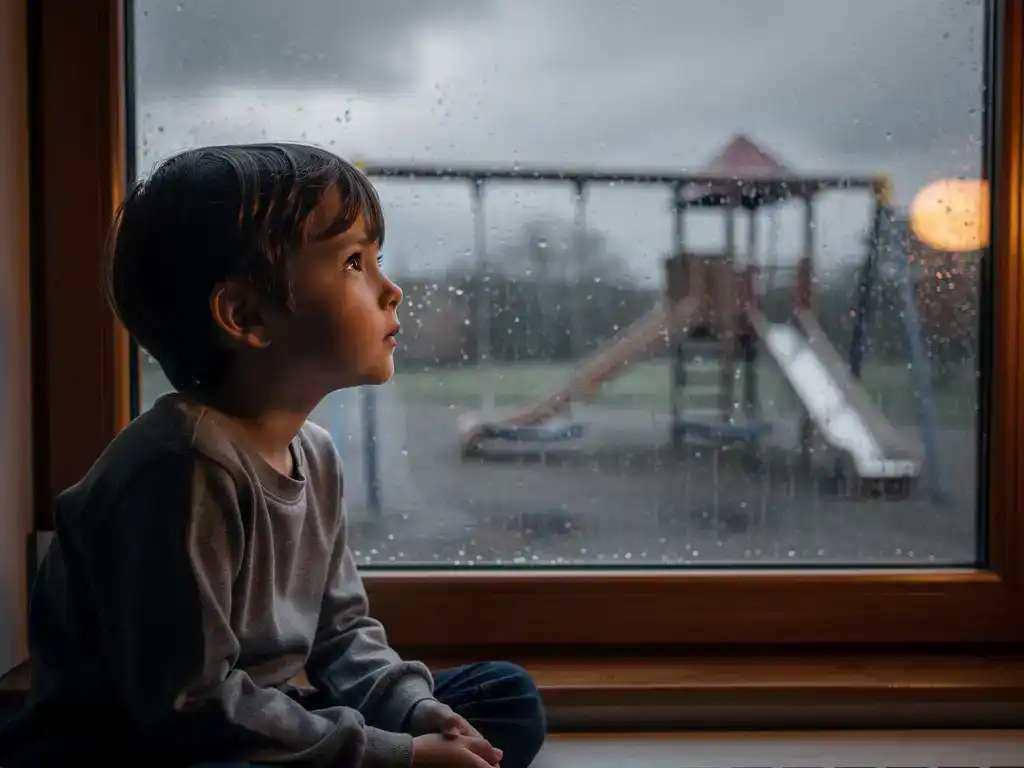
Insufficient outdoor play has a major impact on children's development. Consider weaker muscles, reduced concentration at school, fewer social contacts, and a higher risk of being overweight. Research shows that, on average, children spend much less time outdoors than a generation ago. The consequences are noticeable, both at home and at school. In this article, we list the seven most important effects so that you know exactly what to look out for.
Playing outdoors is not just a fun pastime for children. It is an important part of healthy development, both physical and mental. Yet, in the Netherlands, we see that screens, busy schedules, and a lack of attractive outdoor play spaces mean that children spend less and less time outside. It is time to change that.
Why children play outside less than ever
The reasons why children play outside less are not hard to find. Tablets, smartphones, and game consoles draw attention indoors. Additionally, parents sometimes feel insecure about safety outside the home, and many neighborhoods are not designed for free play. Outdoor play space for children is scarce or uninviting in many districts.
At the same time, children are busier than ever with organized activities, homework, and after-school care. As a result, free, unstructured outdoor play, where a child decides for themselves what to do, has become rare. And that is a shame, because it is precisely this free outdoor play that yields enormous benefits for a child's development.
1: Less movement leads to weaker muscles
Children who play outside too little simply move less. And less physical activity means that muscles, bones, and motor skills develop less well. Climbing, running, jumping, and balancing are activities primarily done outdoors, and these are indispensable for a strong physical foundation.
If children move too little in their early years, it has long-term consequences. Gross motor skills, such as balance and coordination, develop more slowly. You notice this not only on the playground, but also during sports, gym, and even in daily life. A child who is used to playing outside simply has better physical condition.
2: Concentration problems at school are increasing
Playing outside helps children concentrate better afterwards. Fresh air, exercise, and stimuli from nature have a proven calming effect on the brain. Children who spend little time outdoors miss out on this natural reset and often struggle to focus in class.
Schools that consciously schedule breaks with sufficient time for active outdoor play see that children are more productive afterward. The link between movement and learning is strong. A child who can expend energy outdoors sits more calmly at their desk afterwards and is better able to listen and remember.
Want to have an asphalt PumpTrack installed?
500+ tracks worldwide · UCI certified · 5-year warranty
3: Social skills develop less
Playing outdoors is the ideal place where children learn to interact with others. They learn to negotiate, collaborate, resolve conflicts, and build friendships. All those skills develop in practice, on the schoolyard or in the neighborhood, not behind a screen.
Children who play outside too little miss out on many of these spontaneous social moments. They are less accustomed to group dynamics, sometimes have more difficulty reading social cues, and find it harder to make new friends. These are skills you don't learn from a book, but simply by playing together.
4: What does screen time do to children's eyes?
Too much screen time and too little time outdoors come at the expense of children's eye development. Ophthalmologists are seeing a clear increase in myopia in children, and research points to insufficient exposure to daylight as one of the causes. Being outdoors, looking into the distance, and moving in natural light are all good for the eyes.
Screens at close range strain the eyes in a completely different way than playing outdoors. Children who spend sufficient time outside every day are less likely to develop nearsightedness. That is a concrete, physical consequence of insufficient outdoor play that parents and schools must take seriously.
5: Creativity and imaginative play flourish less
Playing outside stimulates the imagination in a way that a screen can never. A branch becomes a sword, a hill becomes a fort, and a puddle of water becomes quite an adventure. That kind of free, unstructured play is the breeding ground for creativity and problem-solving thinking.
Children who play outside frequently learn to solve problems independently, devise rules, and improvise situations. They are accustomed to open endings and unexpected outcomes. These kinds of experiences shape a child in a way that structured activities or digital games simply cannot replace.
6: Stress and feelings of anxiety increase more often
Children who spend little time outdoors suffer more often from stress and anxiety. Nature and physical activity have a calming effect on the nervous system. Playing outdoors also gives children a sense of freedom and control over their own environment, which contributes to a positive self-image and emotional resilience.
Children who spend too much time indoors lack that mental outlet. They build up tension without a good way to release it. Regular outdoor play, even just in the neighborhood or on a playground, helps children regulate their emotions and feel more at ease.
7: Overweight and sleep problems are seen more often
Insufficient outdoor exercise significantly increases the risk of overweight in children. Playing outdoors burns energy in a natural, playful way that children themselves do not perceive as effort. When that movement disappears, the balance shifts quickly.
Sleep problems are added to this. Children who move little during the day and have a lot of screen time find it harder to fall asleep in the evening and sleep more restlessly. Daylight and physical activity are two of the strongest signals for a healthy sleep rhythm. Playing outdoors regulates this naturally.
A PumpTrack as a solution for more outdoor play
Create a inclusive outdoor play area It naturally draws children outdoors. Not because they have to, but because it is fun. A PumpTrack is a perfect example of this. It is an attractive, challenging track where children can ride bikes, scooters, skateboards, or inline skates. Young and old, beginner and advanced: everyone can participate. Wearing a helmet is mandatory on Velosolutions PumpTracks. View our completed projects and see what is possible in your neighborhood.
How Velosolutions helps with more outdoor play for children
We believe that a good outdoor play area makes all the difference. Not just for fun, but for the health, development, and well-being of children. A PumpTrack actively invites children to come outside and move, without it feeling like sports.
- Custom design that fits the space and the target group in your municipality or neighborhood
- Accessible to all ages and levels, from toddlers on a balance bike to teenagers on a BMX, and also suitable for users of a manual wheelchair
- Fully certified according to NEN-EN 14974, so that safety is always guaranteed
- Minimum lifespan of 20 years, annual inspection and maintenance — also available via a maintenance contract — and a five-year warranty, so that the track remains in top condition for years
- Guidance from start to finish, from the initial consultation to delivery and inspection
Read more about us and discover how we have already realized more than 100 PumpTracks in the Netherlands. Do you want to know what a PumpTrack can mean for your municipality or neighborhood? Request a no-obligation consultation and we are happy to think along with you.