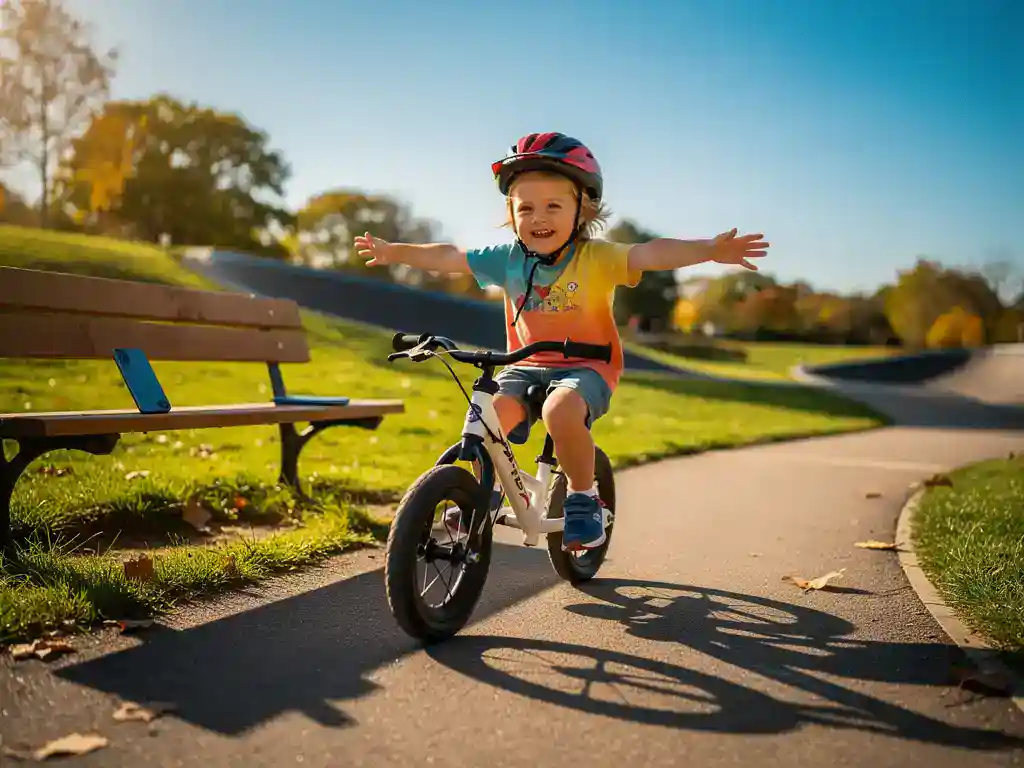
Yes, playing outdoors really helps combat screen addiction in children. Physical activity in the fresh air provides a natural distraction from screens, stimulates dopamine production in a healthy way, and gives children stimuli that a screen simply cannot offer. The more children play outside, the less appealing the screen becomes. In this article, we explain why this works and how to get children outside more easily.
What exactly is screen addiction in children?
Screen addiction in children is a pattern in which a child becomes so strongly attached to phones, tablets, or game consoles that they lose control over their use. The child becomes restless or angry if the screen is taken away, loses interest in other activities, and consistently chooses screen time over playing outside, friends, or homework.
It is not about occasionally watching a video or playing a game. Screen addiction develops when use takes over the daily routine. Children's brains are sensitive to the reward stimuli that apps and games offer. Every notification, every level, and every like activates the reward system in the brain. That makes quitting difficult, even though a child actually wants to.
Recognizing screen addiction is the first step. Signs include sleep problems, concentration problems at school, social withdrawal, and a strong preference for digital activities over anything that takes place outside.
How much screen time is too much for children?
According to guidelines from pediatricians and behavioral experts, a maximum of approximately one hour of screen time per day applies to children aged 2 to 5. For children aged 6 and older, there is no fixed limit, but experts recommend that screen time never comes at the expense of sleep, exercise, homework, or social contact.
A useful way to assess whether screen time is excessive is to look at what it displaces. If a child plays outside less, sleeps less, or has less contact with friends because they are sitting behind a screen, then the balance is off. Not the clock, but the behavior and the balance are the best indicator.
- 0 to 2 years: Preferably no screen time, except video calling with family.
- 2 to 5 years: Maximum 1 hour per day, preferably watch together
- 6 years and older: No fixed limit, but always in balance with movement and sleep
Want to have an asphalt PumpTrack installed?
500+ tracks worldwide · UCI certified · 5-year warranty
Why does playing outside help combat screen addiction?
Playing outdoors helps combat screen addiction because it stimulates the brain in a different, healthier way. Fresh air, exercise, social interaction, and unexpected situations in the outside world provide a rich stream of stimuli that activates the reward system, without the addictive properties of digital media.
When children play outside, they naturally produce dopamine through movement and social connection. That is the same hormone that screens try to activate, but via a healthy channel. Moreover, playing outside requires presence in the moment. A child who is cycling, climbing, or running simply does not have their hands free for a phone.
Playing outdoors also breaks the habit. Screen addiction is largely a habit that repeats itself in the same environment. By providing children with a different environment and different stimuli, you break that pattern. This makes playing outdoors not only fun but also a useful tool to reduce screen addiction.
What are the benefits of playing outdoors for children's development?
Outdoor play supports children's physical, social, and mental development on multiple levels simultaneously. It strengthens muscles and motor skills, improves concentration, stimulates creativity, and teaches children to cooperate, cope with loss, and solve problems independently.
Physical Benefits
Outdoor activity strengthens bones and muscles, improves fitness, and helps maintain a healthy weight. Furthermore, daylight is important for the production of vitamin D and for a good sleep rhythm. Children who play outside regularly sleep better on average than children who spend a lot of time indoors.
Mental and social benefits
Playing outdoors reduces stress and anxiety in children. Nature and open space have a calming effect on the nervous system. Socially, children learn to negotiate, devise rules, resolve conflicts, and cooperate outdoors. These are skills that a screen can never teach them.
How do you entice children to play outside more often?
Getting children to play outside more often is best achieved by making the outside world more attractive than a screen. This means: exciting environments, friends nearby, and activities where they are in charge of what they do.
A few practical tips that really work:
- Go outside yourself. Children copy behavior. If you put down your phone and join in playing, they will naturally follow.
- Make regular time outdoors part of the day. Just as eating and sleeping are a routine, playing outside can become one too.
- Give children freedom outside. Children prefer playing in places where they can explore on their own and take on challenges.
- Choose challenging playgrounds. A boring playground attracts less than a place with a real challenge, such as a inclusive playground that is accessible to all children.
- Limit screen time with clear agreements. No screens before dinner, or only after an hour of playing outside. Clarity helps.
It is not about prohibiting, but about enticing. If playing outside is more fun than sitting inside, children will make that choice themselves.
What is a PumpTrack and why is it so popular with children?
A PumpTrack is a continuous track of hills and gradual turns that you can ride without pedaling, using your body as a motor. You pump with your legs and arms to build and maintain speed. PumpTracks are popular with children because they are challenging, accessible, and addictively fun, in the best sense of the word.
What makes a PumpTrack special is that it is suitable for everyone. From a toddler on a balance bike to a teenager on a BMX: everyone can ride at their own level. No instructor is needed and there are no fixed rules. You hop on and start riding. That sense of freedom and immediate reward makes PumpTracks so appealing. Wearing a helmet is mandatory on Velosolutions PumpTracks.
Moreover, PumpTracks are social places. Children watch each other, learn from each other, and challenge each other. That social aspect ensures that children come back time and time again. View our completed projects and discover what a PumpTrack can do for a neighborhood or municipality.
How Velosolutions helps children play outside more
At Velosolutions, we believe that the outdoors can be much more engaging than a screen if you create the right place. We design and build permanent asphalt PumpTracks that challenge children of all ages to get outside, move, and play. Our tracks comply with the Dutch Amusement and Playground Equipment Act (WAS) and come with a NEN-EN 14974 certificate.
This is what we offer:
- Custom design that fits the space, target group, and budget of your municipality or organization
- Sustainable asphalt construction with a lifespan of at least 20 years and minimal maintenance
- Accessibility for everyone, from young children on balance bikes to adults on racing bikes, including users of manual wheelchairs
- Annual inspection and maintenance so that the PumpTrack always remains in top condition, also available via a maintenance contract.
- Guidance from A to Z, from the initial design to delivery and inspection
Do you want to know what a PumpTrack can mean for your neighborhood, school, or municipality? Read more about us and discover our approach, or request a no-obligation consultation. We are happy to think along with you.