To apply for a subsidy for a PumpTrack, you first need to identify the available municipal, provincial, and national subsidy funds, then draw up a substantiated plan that meets the specified conditions, and submit that plan on time via the appropriate portal. For municipalities and recreation parks, multiple relevant funding sources will be available in 2026, ranging from the National Sports Agreement to local sports and physical activity funds. In this article, we answer the most frequently asked questions about the subsidy process so that you can get started well-prepared.
Which subsidies are available for a PumpTrack?
To construct a PumpTrack in 2026, you can draw on multiple subsidy sources: the National Sports Agreement, provincial sports and physical activity funds, municipal sports budgets, and sometimes European ERDF funds for urban renewal. Which funding source is most relevant depends on your location, target group, and the nature of the initiative.
The main sources of funding at a glance:
- National Sports Agreement / BOSA scheme: The Stimulation of Construction and Maintenance of Sports Facilities scheme provides municipalities and sports organizations with a tax refund on investments in sports infrastructure. An asphalt PumpTrack typically qualifies for this.
- Provincial subsidies: Many provinces have their own sports or exercise programs aimed at youth, health, or outdoor spaces. Check your province's subsidy program.
- Municipal sports and play budget: Municipalities allocate an annual budget for play facilities and public space. This is often the most direct route.
- Fund for Culture and Sport (local): Some municipalities have a local fund for social initiatives, including sports projects.
- European funds (ERDF/Leader): European funds may be available for projects in shrinking regions or with a strong social component.
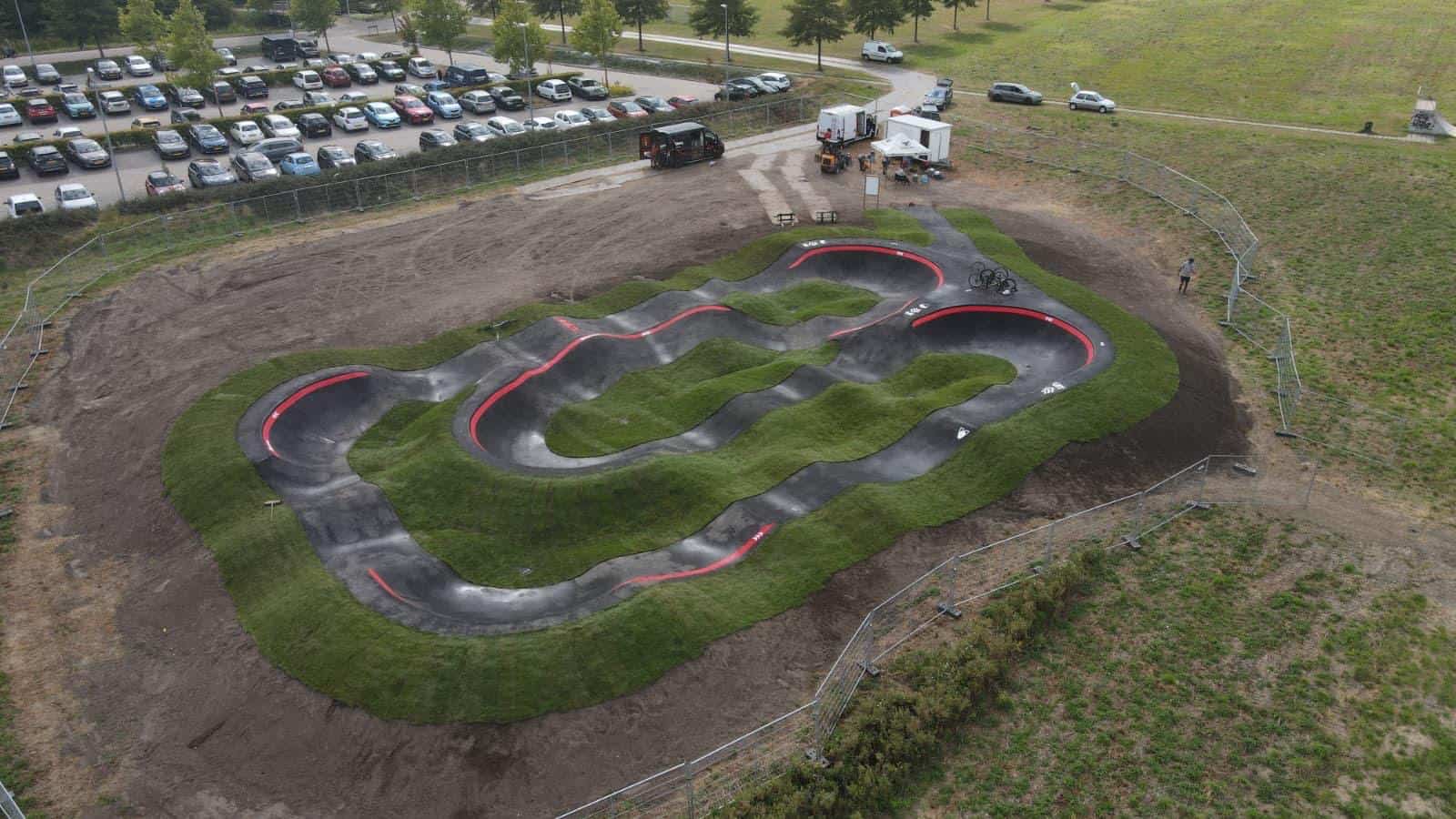
Create a asphalt PumpTrack It scores well with grant providers because it serves a demonstrably broad target group: from young children on balance bikes to adults on BMX bikes, skateboards, scooters, or inline skates. This broad reach makes the investment per user lower than at traditional playgrounds or skate parks, which is a strong argument in grant applications.
What conditions must a grant application meet?
Most grant providers set similar requirements: the project must demonstrably contribute to sports and physical activity for a broad target group, the investment must be sustainable, and the facility must comply with applicable safety and quality standards. For a PumpTrack, this specifically means that you must be able to demonstrate compliance with WAS legislation and the relevant safety standards.
Common conditions are:
- Doelgroepbereik: The facility must be accessible to multiple age groups or specifically aimed at youth or people with disabilities.
- Safety and certification: The installation must comply with the Dutch Amusement and Playground Equipment Act (WAS) and the associated safety standards.
- Durability: Grant providers expect a solid lifespan and a maintenance plan. A high-quality asphalt PumpTrack lasts at least 20 years.
- Co-financing: Many subsidies require you to bear a portion of the investment yourself, often 25 to 50 percent.
- Public character: The facility must be freely accessible to the public, not exclusively to members or guests.
- Project plan and budget: a detailed substantiation of the costs, the intended users, and the management structure.
Want to have an asphalt PumpTrack installed?
500+ tracks worldwide · UCI certified · 5-year warranty
How does the application process work step by step?
The grant application process for a PumpTrack typically proceeds in five steps: exploration of available grants, preparation of the project plan, submission of the application, assessment by the grant provider, and execution with accountability. The lead time varies from a few weeks to several months, depending on the grant provider.
- Step 1 – Exploration: Map out which subsidies are available at the municipal, provincial, and national levels. Contact the subsidy advisor for your municipality or province.
- Step 2 – Drafting a project plan: Describe the objective, target group, location, budget, and management plan. Attach a quotation from a certified contractor.
- Step 3 – Submit application: Submit the application via the designated portal, often digitally via the grant provider's website. Pay attention to the submission deadlines.
- Step 4 – Assessment: The grant provider assesses the application, sometimes after an interview or additional questions. Respond promptly to requests for extra information.
- Step 5 – Implementation and accountability: You can start after the approval. Keep all invoices and document the progress, as you will be required to account for it afterwards.
Would you like to get some inspiration for the location and the design in advance? View our completed projects to see what other municipalities and recreation parks have set up.
What are the most common mistakes in grant applications?
The most common mistake in grant applications for a PumpTrack is providing overly vague substantiation of the societal impact. Grant providers want concrete figures, not general promises. Other common errors include late submission, missing attachments, and forgetting to arrange co-financing.
Avoid these pitfalls:
- No concrete user figures: Estimate the expected number of users per week and substantiate this with data from comparable projects in other municipalities.
- Missing certification: If you cannot provide proof that the PumpTrack complies with WAS legislation and applicable safety standards, the application is often rejected.
- Late submission: Many grant funds have fixed submission deadlines. If you miss them, you have to wait a whole year.
- No management plan: Grant providers want to know who manages the PumpTrack and how maintenance is arranged after completion.
- Co-financing not arranged: If you cannot provide proof of the personal contribution, the application will not be processed.
How do you combine multiple funding sources for a PumpTrack?
You can combine multiple funding sources for a PumpTrack, provided you are transparent about all contributions and the total budget is correct. A commonly used combination is the municipal sports budget, supplemented by a provincial subsidy and the BOSA tax refund. Please note that some subsidies may not be combined with other government subsidies.
A practical example of a financing mix:
- Municipal sports budget: covers the personal contribution (25 to 50 percent of the total investment).
- Provincial subsidy: additional contribution for projects aimed at youth or health.
- BOSA scheme: Tax refund on the VAT of the investment, available to municipalities and recognized sports organizations.
- Local funds or sponsorship: additional resources through local entrepreneurs or a sports fund.
Always check the cumulation rules for each subsidy. Some schemes set a maximum on the total subsidy percentage, for example, a maximum of 70 percent of the total project costs from government contributions.
When is the best time to submit a grant application?
The best time to submit a grant application is early in the fiscal year, preferably in the first quarter. Many grants operate on a budgetary basis: those who apply first have the best chance. So do not wait until the last moment.
Take the following moments into account:
- January to March: Municipalities and provinces often open their subsidy windows at the beginning of the year. This is the ideal time to submit an application.
- September to October: a second chance for grants with multiple submission deadlines per year.
- For the municipal budget cycle: If you want to include a PumpTrack in the municipal sports policy for the following year, you need to discuss this with policy officers as early as the spring.
Also align your application with the construction schedule. An asphalt PumpTrack has a construction time and an optimal construction season (spring and summer). If you apply for a subsidy in January and receive approval in May, you can start construction that same year.
How Velosolutions helps with your grant application
We guide municipalities and recreation parks not only during the construction of a PumpTrack, but also throughout the process leading up to it. We assist you with substantiating your application, provide the necessary documentation regarding certification and safety, and help determine the financing mix that best suits your situation.
- Project documentation: We provide all the technical information you need, including proof of compliance with WAS legislation and applicable safety standards.
- Reference projects: With more than 100 PumpTracks in the Netherlands, we can provide concrete examples of similar projects in other municipalities.
- Justification of user reach: We help you demonstrate that an asphalt PumpTrack is one of the widest sports facilities you can build for everyone with wheels — including users of manual wheelchairs.
- Maintenance plan: We draw up a multi-year maintenance plan that grant providers appreciate, including the 5-year warranty we offer as standard. Velosolutions also offers annual inspection and maintenance, which can also be purchased via a maintenance contract.
- Total care: From initial consultation to completion and annual inspection, we take care of it.
Read more about us and discover why we have been the market leader in the Netherlands for 12 years. Ready to take the next step? Request a no-obligation consultation and we help you on your way.